
Mrs B’s wildlife garden to maximise biodiversity
This design was created for a client who wanted her garden to become a living sanctuary: a place filled with life, movement, and connection to the natural world. After recovering from illness, Mrs B sought a space that would nurture both biodiversity and wellbeing. The result is a restorative wildlife garden that supports amphibians, birds, mammals, and invertebrates, while offering a calm, sensory environment for reflection and enjoyment.
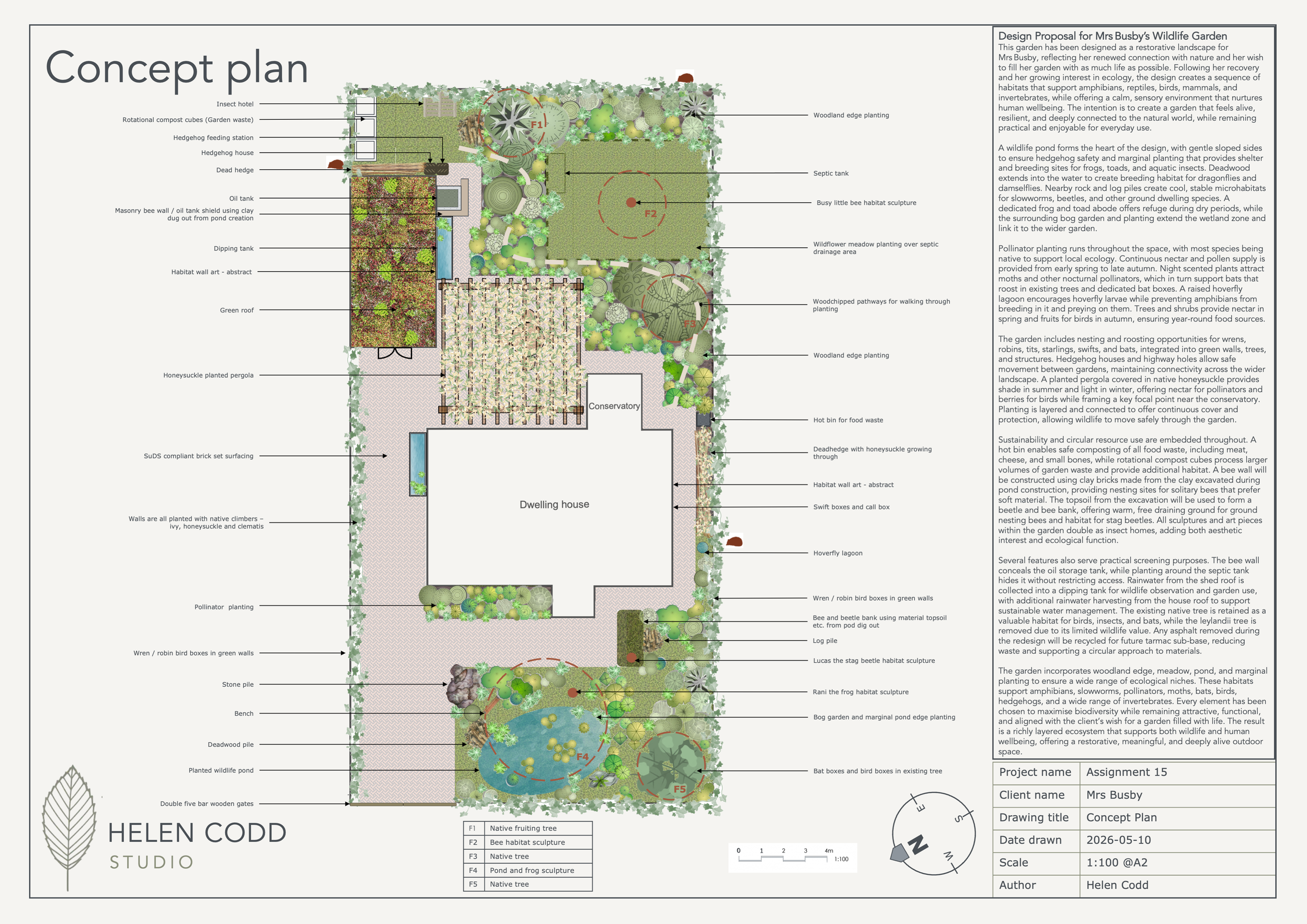
The garden is structured around a planted wildlife pond with gentle sloped sides for hedgehog safety and marginal planting for frogs, toads, and dragonflies. Surrounding habitats include meadow, woodland edge, and bog garden planting, all predominantly native to support local ecology. Deadwood and rock piles create microhabitats for slowworms and beetles, while a raised hoverfly lagoon encourages pollinators without allowing newts to prey on larvae. Night‑scented plants attract moths and bats, and trees provide nectar in spring and fruit in autumn.
Sustainability runs through every detail. Clay excavated from the pond is reused to form a bee wall that screens the oil tank, while topsoil creates a beetle and bee bank. Removed asphalt is recycled for future tarmac sub‑base, and rainwater is harvested from the shed and house roofs to feed a dipping tank and support planting. A hot bin, dead hedges and rotational compost cubes process all food and garden waste, creating habitat as well as compost. Sculptures and art pieces double as insect homes, blending beauty with ecological purpose.
The garden also includes nesting boxes for wrens, robins, tits, starlings, and swifts, roosting sites for bats, and hedgehog houses connected by highway holes for safe movement between gardens. A honeysuckle‑planted pergola provides shade in summer and light in winter, offering nectar for pollinators and berries for birds. The existing native tree is retained for its wildlife value.
This design celebrates the idea that a garden can be both restorative and alive. A place where human recovery and ecological renewal meet. It reflects my belief that beauty and biodiversity belong together, and that thoughtful design can help people reconnect with the natural rhythms of life.
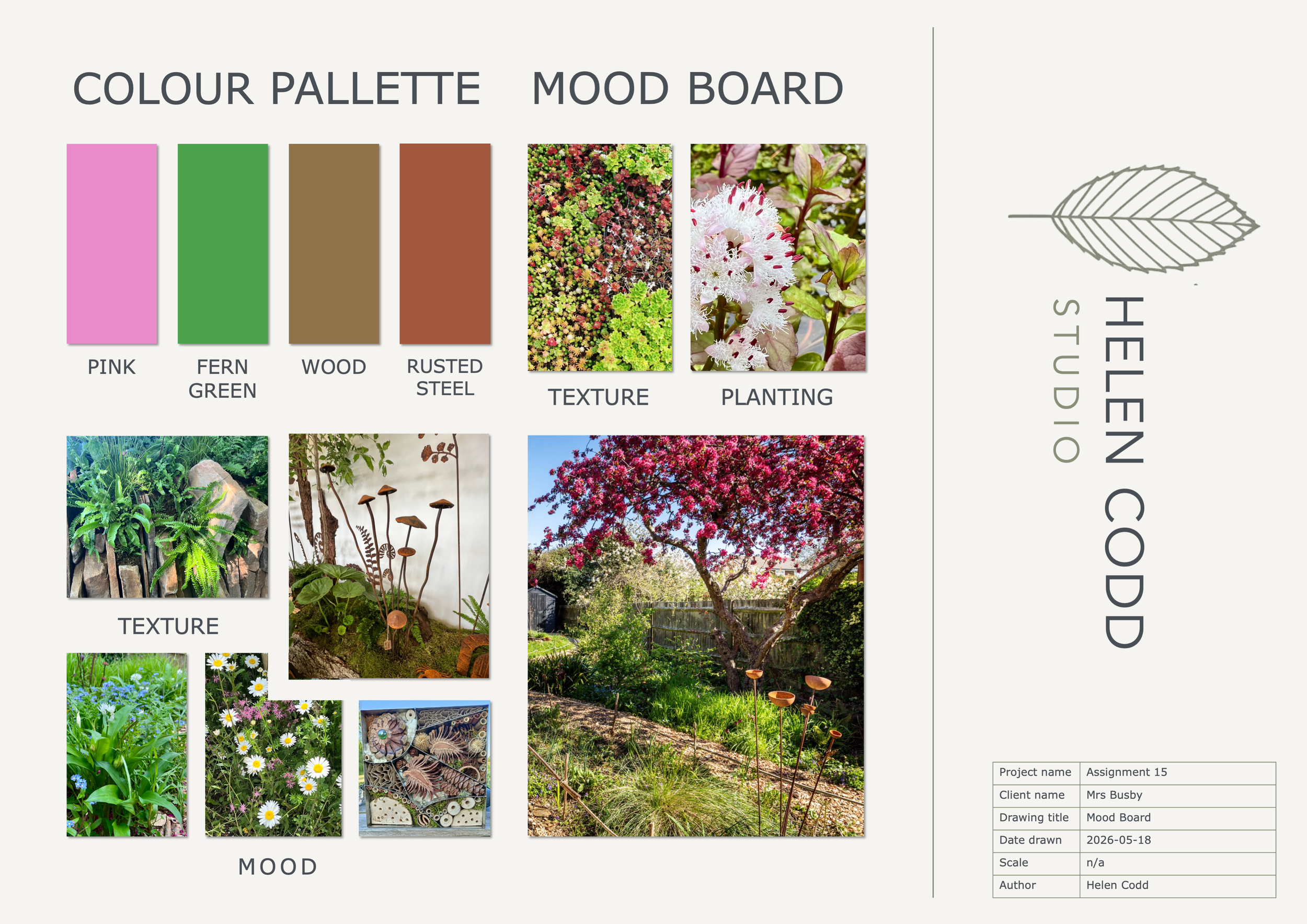
Includes reference imagery to express mood and intention.